

Hey there! As a supplier of aluminum alloy radiators, I often get asked about the radiation heat transfer coefficient of these rads. So, I thought I'd take a few minutes to break it down for you in a way that's easy to understand.

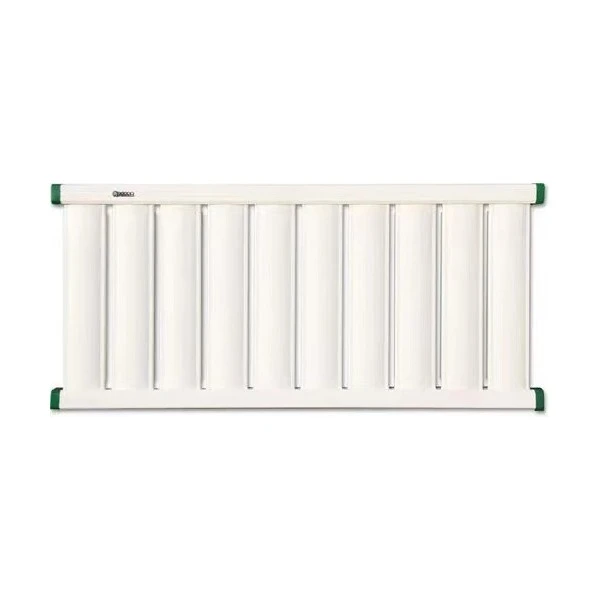
First off, let's talk about what the radiation heat transfer coefficient actually is. In simple terms, it's a measure of how well a material can transfer heat through radiation. Radiation is one of the three main ways heat can be transferred, the other two being conduction and convection. When it comes to aluminum alloy radiators, understanding this coefficient is crucial because it can tell us a lot about how effective the radiator will be at getting rid of heat.
Aluminum alloys are popular choices for radiators for several reasons. They're lightweight, which makes them easy to install and transport. They're also highly conductive, meaning they can quickly absorb and transfer heat. But when it comes to radiation, there are a few factors that can affect the heat transfer coefficient.
One of the key factors is the surface finish of the radiator. A rough or painted surface will typically have a different radiation heat transfer coefficient compared to a smooth, polished one. This is because the surface finish affects the emissivity of the material. Emissivity is a measure of how well a material can emit thermal radiation. For example, a black, matte surface generally has a higher emissivity than a shiny, reflective surface. So, if you want your aluminum alloy radiator to have a good radiation heat transfer coefficient, you might consider choosing a finish that maximizes emissivity.
Another factor is the temperature difference between the radiator and its surroundings. The greater the temperature difference, the more heat will be transferred through radiation. This is based on the Stefan - Boltzmann law, which states that the rate of heat transfer by radiation is proportional to the fourth power of the absolute temperature. So, if your radiator is running at a high temperature and the surrounding air is cool, you can expect a relatively high rate of radiation heat transfer.
Now, let's talk about some real - world applications of aluminum alloy radiators. We've got a wide range of products to suit different needs. If you're looking for a Carbon Crystal Radiator, we've got you covered. These radiators are great for providing efficient and consistent heat in various settings. They combine the benefits of carbon crystal technology with the excellent heat - transfer properties of aluminum alloy.
For those who need a radiator in a smaller space, our Wall Mounted Water Heater Fan is a fantastic option. It's designed to be compact yet powerful, and it can work well in situations where space is limited.
And if you're renovating your kitchen or bathroom, our Kitchen and Bathroom Radiator is a perfect fit. It's not only functional but also stylish, adding a touch of elegance to your living space.
Calculating the exact radiation heat transfer coefficient of an aluminum alloy radiator can be a bit tricky. It usually involves some complex equations and taking into account all the factors we've mentioned above. But in general, aluminum alloy radiators have a decent radiation heat transfer coefficient, especially when compared to some other materials.
In practical applications, engineers and designers often use empirical data and computer simulations to estimate the heat transfer performance of these radiators. They'll consider things like the size and shape of the radiator, the air flow around it, and the operating conditions.
If you're in the market for an aluminum alloy radiator, it's important to understand that the radiation heat transfer coefficient is just one piece of the puzzle. Other factors like convection and conduction also play significant roles in the overall heat - transfer process. A well - designed radiator will optimize all of these heat - transfer mechanisms to provide the best possible performance.
So, why should you choose our aluminum alloy radiators? Well, we've been in the business for a long time, and we've got a lot of experience in producing high - quality radiators. We use the latest manufacturing techniques and the best materials to ensure that our products are reliable and efficient.
Whether you're a homeowner looking to upgrade your heating system or a contractor working on a large - scale project, we can provide you with the perfect radiator for your needs. We offer a wide range of sizes, styles, and configurations to suit different applications.
If you're interested in learning more about our products or have any questions about the radiation heat transfer coefficient or any other technical aspects, don't hesitate to reach out. We're here to help you make the right decision for your heating requirements. Contact us today to start a conversation about your radiator needs and let's see how we can work together to find the best solution for you.
References:
- Incropera, F. P., & DeWitt, D. P. (2001). Fundamentals of Heat and Mass Transfer. John Wiley & Sons.
- Holman, J. P. (2002). Heat Transfer. McGraw - Hill.