

Hey there! As a household water pump supplier, I often get asked about the maximum temperature a household water pump can handle. It's a crucial question, especially when you're dealing with different water systems at home. So, let's dive right in and explore this topic.
First off, it's important to understand that not all household water pumps are created equal. There are various types of pumps out there, each designed for specific tasks and with different temperature tolerances. For instance, Modern Pumps for Home Use are often more advanced and might have better temperature handling capabilities compared to older models.
Let's start by looking at the common types of household water pumps. One of the most popular ones is the household automatic booster pump. These pumps are used to increase water pressure in the home, ensuring that you get a good flow of water in your taps, showers, and appliances. The Household Automatic Booster Pump is designed to work efficiently in normal household water temperature conditions.

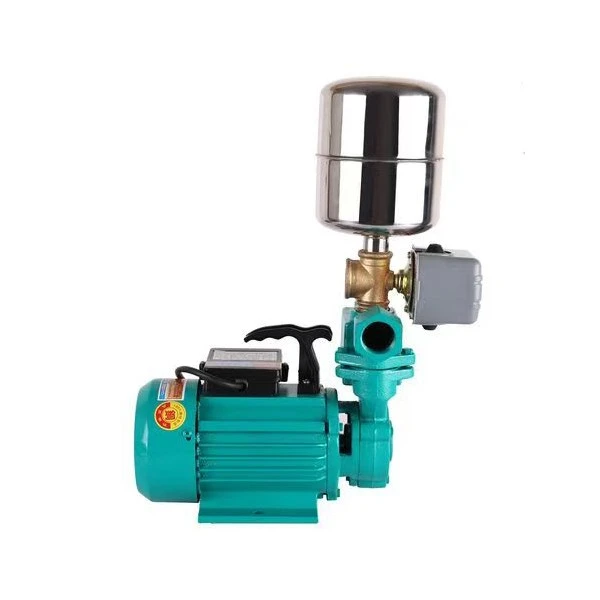
Typically, most household automatic booster pumps can handle water temperatures up to around 60 - 80 degrees Celsius. This range is suitable for most domestic applications, as the water coming from your water heater is usually within this temperature bracket. However, if you're using extremely hot water, say for a high - end coffee machine or a specialized hot water appliance, you might need to be cautious.
Exceeding the maximum temperature limit can cause several problems. For starters, the seals in the pump can start to degrade. Seals are crucial for preventing water leakage and maintaining the pump's efficiency. When they get too hot, they can become brittle and start to crack, leading to water leaks and reduced performance.
Another issue is the motor. The motor in a household water pump is designed to operate within a certain temperature range. If the water temperature is too high, it can cause the motor to overheat. Overheating can lead to a shorter lifespan of the motor, and in severe cases, it can even cause the motor to burn out completely.
Now, let's talk about the domestic sewage lifting pump. These pumps are used to move wastewater from basements or other low - lying areas to the main sewer system. The Domestic Sewage Lifting Pump has different temperature requirements compared to the booster pump.
Since sewage water is usually at a relatively lower temperature, most domestic sewage lifting pumps are designed to handle water temperatures up to around 40 - 50 degrees Celsius. This is because the sewage water doesn't typically get heated to high temperatures like the water in your hot water system.
If you try to use a domestic sewage lifting pump with hot water, it can cause damage to the pump's components. The impeller, which is responsible for moving the water, can warp or become damaged due to the high temperature. Also, the internal wiring and electrical components can be affected, increasing the risk of electrical shorts and malfunctions.
So, how can you ensure that your household water pump operates within the safe temperature range? First, you need to know the specifications of your pump. Always refer to the user manual that comes with the pump. It will clearly state the maximum temperature the pump can handle.
If you need to use hot water, you can install a temperature regulator or a mixing valve. A temperature regulator can be set to control the temperature of the water going into the pump, ensuring that it stays within the safe range. A mixing valve, on the other hand, can mix hot and cold water to achieve the desired temperature.
It's also a good idea to monitor the water temperature regularly. You can use a simple thermometer to check the temperature of the water before it enters the pump. If you notice that the water temperature is approaching or exceeding the maximum limit, take immediate action to reduce the temperature.
As a household water pump supplier, I've seen many cases where customers have faced problems due to using pumps outside their temperature limits. That's why it's so important to be aware of these things.
If you're in the market for a new household water pump, make sure to consider your specific needs. If you have a high - temperature application, look for pumps that are specifically designed to handle hot water. There are pumps available that can handle water temperatures up to 100 degrees Celsius or even higher, but they might be more expensive.
In conclusion, understanding the maximum temperature a household water pump can handle is crucial for its proper operation and longevity. Whether you're using a household automatic booster pump or a domestic sewage lifting pump, always stay within the recommended temperature range.
If you have any questions about our household water pumps or need advice on choosing the right pump for your needs, don't hesitate to get in touch. We're here to help you make the best decision for your home. Contact us for more information and to start a procurement discussion.
References:
- General knowledge from the household water pump industry
- Manufacturer's manuals of various household water pumps