

As a seasoned supplier of ore sand ball mills, I am often asked about the capacity of these essential pieces of equipment in the mining industry. The capacity of an ore sand ball mill is a crucial factor that can significantly impact the efficiency and productivity of a mining operation. In this blog post, I will delve into the various aspects that determine the capacity of an ore sand ball mill, providing valuable insights for those considering purchasing or using such equipment.
Understanding the Basics of an Ore Sand Ball Mill
Before discussing the capacity, it is important to understand what an ore sand ball mill is and how it works. An Ore Sand Ball Mill is a type of grinder used to grind and blend materials for use in mineral dressing processes, paints, pyrotechnics, ceramics, and selective laser sintering. It works by rotating a cylinder with steel grinding balls, causing the balls to fall back into the cylinder and onto the material to be ground. The rotation is usually between 4 to 20 revolutions per minute, depending on the diameter of the mill.
Factors Affecting the Capacity of an Ore Sand Ball Mill
The capacity of an ore sand ball mill is not a fixed value but is influenced by several factors. These factors can be broadly categorized into three main groups: equipment - related factors, material - related factors, and operational factors.
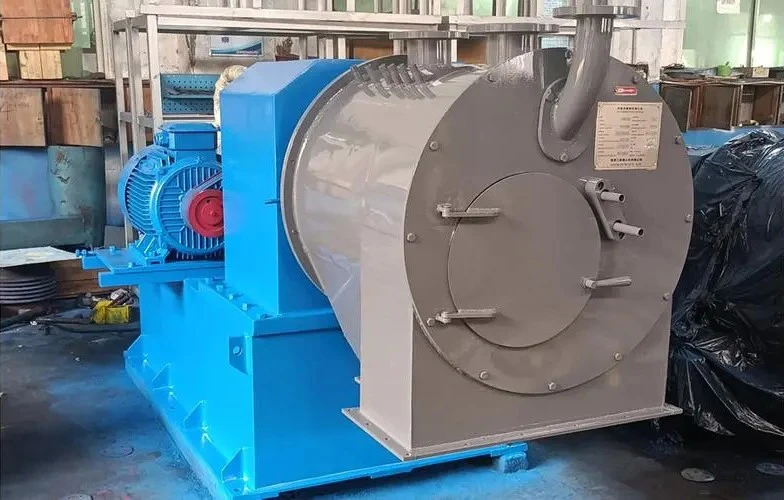

Equipment - Related Factors
- Mill Size: The physical dimensions of the ball mill, including its diameter and length, play a significant role in determining its capacity. Generally, larger mills have a higher capacity because they can hold more grinding media and ore. A mill with a larger diameter allows for a greater volume of material to be processed at once, while a longer mill provides more residence time for the grinding process, which can improve the efficiency of size reduction.
- Grinding Media: The type, size, and quantity of grinding media used in the ball mill also affect its capacity. Different types of grinding media, such as steel balls, ceramic balls, or pebbles, have different densities and hardness, which can impact the grinding efficiency. The size of the grinding media is also important; smaller balls are more suitable for fine grinding, while larger balls are better for coarse grinding. The quantity of grinding media in the mill needs to be optimized to ensure maximum grinding efficiency and capacity.
Material - Related Factors
- Ore Hardness: The hardness of the ore being processed is a critical factor. Harder ores require more energy and time to grind, which can reduce the mill's capacity. For example, quartz - rich ores are generally harder than limestone ores, and thus, the mill may have a lower capacity when processing quartz - rich ores.
- Ore Moisture Content: High moisture content in the ore can cause the material to stick to the grinding media and the mill walls, reducing the grinding efficiency and the mill's capacity. Therefore, it is often necessary to dry the ore before feeding it into the ball mill, especially if the moisture content is above a certain level.
Operational Factors
- Feed Rate: The rate at which the ore is fed into the ball mill is a key operational factor. If the feed rate is too high, the mill may become overloaded, leading to a decrease in capacity and an increase in energy consumption. On the other hand, if the feed rate is too low, the mill may not be operating at its full potential, resulting in under - utilization of the equipment.
- Rotational Speed: The rotational speed of the ball mill affects the movement of the grinding media and the ore. A higher rotational speed can increase the impact force of the grinding media, which may improve the grinding efficiency and capacity. However, if the rotational speed is too high, it can cause excessive wear on the mill and the grinding media, as well as increase the energy consumption.
Measuring the Capacity of an Ore Sand Ball Mill
The capacity of an ore sand ball mill is typically measured in terms of the amount of material that can be processed per unit of time, usually in tons per hour (t/h). There are several methods to estimate the capacity of a ball mill, including theoretical calculations and empirical methods.
Theoretical calculations are based on the principles of grinding mechanics and take into account factors such as the mill size, grinding media properties, and ore characteristics. However, these calculations often make simplifying assumptions and may not accurately reflect the actual capacity of the mill in a real - world mining operation.
Empirical methods, on the other hand, rely on data collected from actual mill operations. These methods use regression analysis or other statistical techniques to develop relationships between the mill capacity and various influencing factors. Empirical methods are generally more accurate in predicting the mill capacity but require a significant amount of data from similar mills.
Importance of Capacity in Ore Sand Ball Mill Selection
Selecting the right capacity ore sand ball mill is crucial for the success of a mining operation. An undersized mill may not be able to meet the production requirements, leading to bottlenecks in the processing line and reduced overall productivity. On the other hand, an oversized mill can result in higher capital costs, increased energy consumption, and unnecessary maintenance expenses.
When choosing an ore sand ball mill, it is important to consider the current and future production requirements of the mining operation. Factors such as the expected ore throughput, the desired product size, and the available space and power supply should all be taken into account.
Complementary Equipment for Ore Sand Processing
In addition to the ore sand ball mill, there are other pieces of equipment that can be used in conjunction with it to improve the overall efficiency of ore sand processing. Two such important pieces of equipment are the Ore Sand Mixer and the Ore Sand Drum Screen.
The ore sand mixer is used to mix the ore sand with various additives or reagents before the grinding process. This can improve the grinding efficiency and the quality of the final product. The ore sand drum screen, on the other hand, is used to separate the ground ore sand into different particle sizes, ensuring that only the desired particle size is further processed.
Conclusion
The capacity of an ore sand ball mill is a complex parameter that is influenced by a variety of factors, including equipment - related, material - related, and operational factors. Understanding these factors is essential for accurately estimating the mill's capacity and selecting the right equipment for a mining operation.
If you are in the market for an ore sand ball mill or other related mining equipment, I encourage you to reach out for a detailed discussion. We can help you determine the most suitable equipment based on your specific requirements and ensure that you get the best value for your investment. Contact us today to start the conversation about how we can support your mining needs.
References
- "Mineral Processing Design and Operations: An Introduction" by Barry A. Wills and Tim Napier - Munn.
- "Ball Milling Theory and Practice for the Amateur Pyrotechnician" by Lloyd S. Smith.