

As a seasoned supplier of aluminum alloy radiators, I've witnessed firsthand the diverse requirements and concerns of our customers. One question that frequently arises is, "How does the surface color of an aluminum alloy radiator affect its heat dissipation?" This seemingly simple query has a complex answer that combines principles of physics, engineering, and aesthetics. In this blog post, we'll delve into the science behind the relationship between surface color and heat dissipation, exploring how different colors can impact the performance of your radiator.
Understanding Heat Dissipation in Aluminum Alloy Radiators
Before we discuss the role of surface color, let's briefly understand how aluminum alloy radiators work. Heat dissipation is the process of transferring thermal energy from a hot object (such as an electronic device or a heating system) to a cooler environment. Aluminum alloy radiators are designed to efficiently absorb and disperse heat through a combination of conduction, convection, and radiation.
Conduction is the transfer of heat through direct contact between two objects. In a radiator, heat is transferred from the heat source to the radiator fins through conduction. Convection is the transfer of heat through the movement of fluids (such as air or water). As the radiator fins heat up, they transfer heat to the surrounding air, causing it to rise and creating a natural convection current. Radiation is the transfer of heat through electromagnetic waves. All objects emit thermal radiation, and the amount of radiation emitted depends on the object's temperature and surface properties.
The Role of Surface Color in Heat Radiation
Surface color plays a significant role in the radiative heat transfer of an aluminum alloy radiator. The color of an object affects its ability to absorb and emit thermal radiation. Dark colors, such as black and dark blue, are good absorbers and emitters of thermal radiation, while light colors, such as white and silver, are poor absorbers and emitters.
This phenomenon can be explained by the concept of emissivity. Emissivity is a measure of an object's ability to emit thermal radiation relative to a perfect black body. A perfect black body has an emissivity of 1, meaning it emits all the thermal radiation it absorbs. In contrast, a perfect reflector has an emissivity of 0, meaning it reflects all the thermal radiation it receives.
Dark-colored surfaces have a higher emissivity than light-colored surfaces. This means that they absorb more thermal radiation from the heat source and emit more thermal radiation to the surrounding environment. As a result, dark-colored aluminum alloy radiators can dissipate heat more efficiently than light-colored radiators.
Experimental Evidence
Numerous studies have been conducted to investigate the effect of surface color on the heat dissipation performance of aluminum alloy radiators. One such study, published in the Journal of Thermal Science and Engineering Applications, compared the heat dissipation rates of black, white, and silver aluminum alloy radiators under identical conditions.
The results of the study showed that the black radiator had the highest heat dissipation rate, followed by the white radiator and then the silver radiator. The black radiator dissipated approximately 20% more heat than the silver radiator, demonstrating the significant impact of surface color on heat dissipation performance.
Practical Considerations
While dark-colored aluminum alloy radiators offer better heat dissipation performance, there are several practical considerations to keep in mind when choosing a radiator color.
- Aesthetics: The color of your radiator should complement the decor of your space. If you're installing the radiator in a residential or commercial building, you may prefer a lighter color that blends in with the surrounding environment.
- Cleaning and Maintenance: Dark-colored radiators may show dirt and dust more easily than light-colored radiators. If you're concerned about the appearance of your radiator, you may want to choose a light color that is easier to clean.
- Cost: Dark-colored radiators may be more expensive than light-colored radiators due to the additional processing required to achieve the desired color.
Our Product Offerings
As a leading supplier of aluminum alloy radiators, we offer a wide range of products to meet the diverse needs of our customers. Our radiators are available in a variety of colors, including black, white, silver, and custom colors to match your specific requirements.
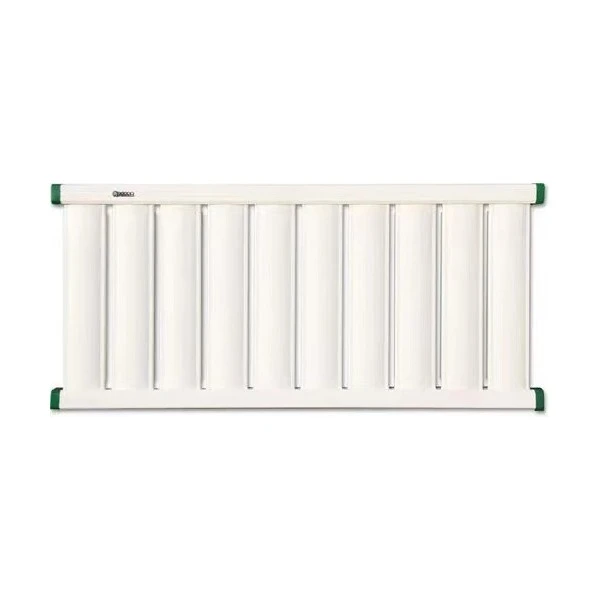

In addition to our standard radiator offerings, we also provide specialized products such as Carbon Crystal Radiator, Kitchen and Bathroom Radiator, and Wall Mounted Water Heater Fan. These products are designed to provide superior heat dissipation performance in specific applications.
Conclusion
In conclusion, the surface color of an aluminum alloy radiator can have a significant impact on its heat dissipation performance. Dark-colored radiators offer better heat dissipation than light-colored radiators due to their higher emissivity. However, when choosing a radiator color, it's important to consider practical factors such as aesthetics, cleaning and maintenance, and cost.
If you're in the market for an aluminum alloy radiator, we invite you to explore our product offerings and discuss your specific requirements with our team of experts. We're committed to providing high-quality products and exceptional customer service to help you achieve optimal heat dissipation performance in your application. Contact us today to learn more about our products and services and to start the procurement process.
References
- Journal of Thermal Science and Engineering Applications study on surface color and heat dissipation in aluminum alloy radiators.